Steam Wagon
Image
Origin
Developed in Embercrag, especially by gnome engineers in The Crag, as a way to move ore and stone through mines and industrial roads without relying entirely on animal teams
Background
Steam wagons began as working machines rather than status symbols. The earliest models were mine-haulers: low, stubborn vehicles built to drag ore, cut stone, and tools through the harsh industrial routes of Embercrag. Their usefulness made them spread quickly beyond the mountain holds. Once roadwrights, dockyards, and merchants saw what they could carry, steam wagons turned up anywhere heavy loads had to move steadily and without complaint.
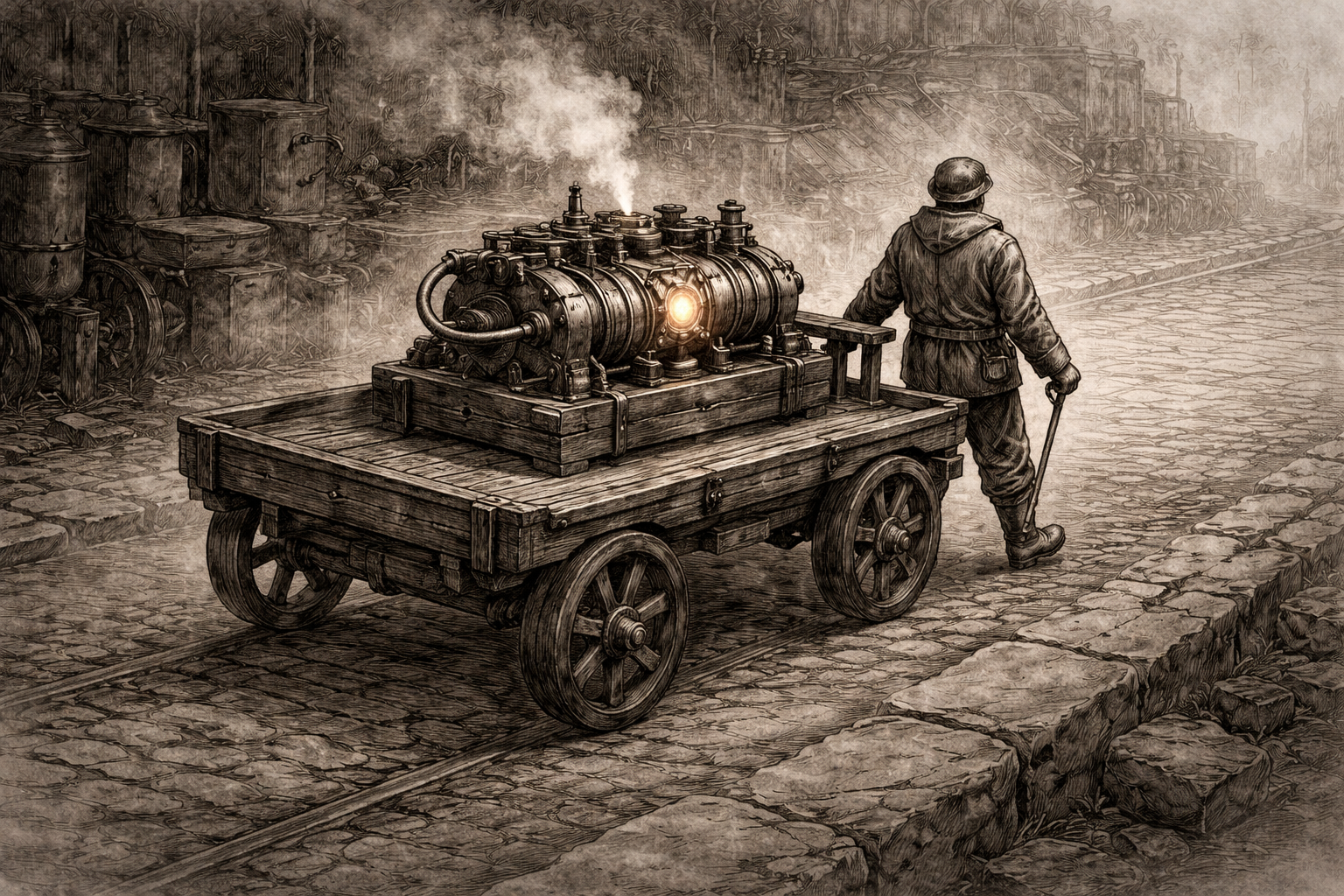
Physically, a steam wagon is still a wagon. The body is usually a flat plank cart about the size of an ordinary horse wagon, with reinforced wheels and room for cargo, tools, or passengers. What makes it distinct is the engine rigged onto it: a compact embercoil block roughly two feet by two feet by two feet, dense with fitted pipes, valves, a heat-stone housing, and paired coils, usually mounted toward the front or center of the wagon bed. Steam vents from it in intermittent hissing bursts. It looks engineered, practical, and slightly improvised rather than elegant.
At their core, steam wagons use a mounted embercoil engine: a fitted Heat Stone, a sealed inner coil, and a working line linked to a small reservoir and pressure assembly. The design is compact enough to sit on a wagon bed without taking the whole vehicle over, which is part of why the machine spread so quickly through Aldenheim. They are still demanding in practice. Most leak, drink water constantly, and require a runner or mechanic who knows how to listen for a pressure change before it becomes a failure. The machine does not replace attention. It simply turns attention into movement.
They are not fast. A good steam wagon usually moves at about the pace of a walking human. What it offers is endurance and hauling power. A wagon that would exhaust horses over distance can keep grinding forward as long as it has water, heat, and someone to mind it. Many are fitted so an ordinary unpowered wagon can be hitched behind them, allowing one engine wagon to pull extra cargo at a very slow pace. Most runners still walk beside the machine, steering and adjusting it from the ground, though newer Crownvale models sometimes place the runner on a perched seat so the wagon can serve as a rough passenger conveyance as well as a freight engine.
In modern Aldenheim, steam wagons are as much a sign of infrastructure as of invention. They are common in industrial districts, archive yards, canalside depots, mines, and port roads. In richer parts of Crownvale, they have also become ride-along machines for moving people or baggage in bad weather. They are loud, hot, and unglamorous, but they make the realm feel built.
Properties
- Move at roughly walking pace but can haul far heavier loads over distance than a normal handcart.
- Are wagon-sized machines, not rail engines: essentially a normal flat wagon fitted with a compact embercoil drive block.
- Can pull one or more unpowered wagons behind them, though doing so slows them further and is mainly used for freight.
- Usually rely on a fitted Heat Stone and a small water reservoir that needs frequent refilling.
- Require a runner or mechanic nearby to steer, regulate pressure, and keep the engine from failing.
- Spread easily because the engine core is small enough to mount into an existing wagon without requiring a large dedicated boiler space.
- Best suited to roads, industrial lanes, mine routes, and port districts rather than broken wilderness terrain.
- Serve both freight and limited passenger use, depending on the build and the wealth of the owner.
Notes
███ █████ ██████ █████ ███████████ ███████ █████████████ ████████ ███ ███ ████ ████ ████████ █████ ███ ███████ █████ ██████████ █████████ ████████ ███████ ████████ █████████ ████ ████ ████ █████████████ ██████████ ███ █████ ██ █████
█ █████ █████ █████ █████ █████ █ █████ ██████████ █████ ██ ██████ ████ ███████ ██ █ ██████ ████ █████ █████ █████ ███ ████ ██ █ █████ █████ ███ █ █████ ██ ███████████ ███████ ██ ███ █████ ███ ██ █ ███████ █████████ ██████ █████ ███████ ███ ████ ██ ███ ████ ██ ███ █████ █ █████ ██████ ████ ██ ██████ ██████ ██████ ██████ ███████ ███ █ ███████ ██████████ ████████ ████ █████ ███████ ██████ ██ █████ ███████ ███ ███████ ██████ ████ ███████ ████████ ███ ████████ ███████████ ████ █ ██████ ███████ ██████ ██ ███ ███ ████ ██ ███ ███████ ████ ███ █████ ████████ ████ ██ █ █████ ████████ █ █████ ███████ ███████ ███ █ █████ ██████ ██ ███████ ███ ███████ ██████ ███████ █████████ ██████████████ ████ ██ ██████ █ ████ █████████ ██ █ ████ ███████ ████ ███████ ████████ █ ████████ ██████ ██ █████ ██ █████ ███████████
███ █████ ██████ ███████ █████ █████ ██████ █ ███ █████████ ███████████ ████ ██████████ █████ ███████ █ ██████ ████ █████ █████ ███ ████ ██ █ █████ █████ ████ ██████████ █████████████ ██████ ███ █████ ██████ ███████ ██ ███ ████████████ ██ ███ █████ ███ ██ █ ███████ █████████ ██████ █████ █████ ███ ████ ██████ █████ ████ ██████ ██████ ███████ ██████ ██████ █ ███████ ██████████ ████████ █████ █████ ██████████ ███ █████ █████ ██████ ███████ ████████ ███ ████████ ███████████ ███ ████████ ██ ███████ ██ ███████ ██ ██████ ██ ██████ ██ ███████████ ██ ██████ ████ ██ ███████████ ██ █████ ██ █████ █████████ █████████ ███████ ██████ ███████ ███ ███████