Steam Revolution
Image
Public Account
No invention has altered daily life in Aldenheim as thoroughly as the steam engine. What began in Embercrag as a mining and workshop innovation changed how the realms haul freight, move water, lift weight, and keep hard infrastructure working in bad conditions. Roads, docks, lockworks, mine approaches, and cargo yards all began to feel different once stored heat could be turned into reliable mechanical force without demanding a great furnace hall or an oversized boiler room.
The revolution began among gnome engineers, artificers, and practical forge-workers scattered through the industrial holds of Embercrag, with the densest concentration of experimentation in The Crag. These were not isolated geniuses working in elegant towers. They were pipefitters, rune-cutters, valve-makers, furnace-tenders, ledger-minded patrons, and stubborn tinkerers trying to solve hard problems of hauling, pumping, heat control, and labor in a realm where survival already depended on mastering stone and fire.
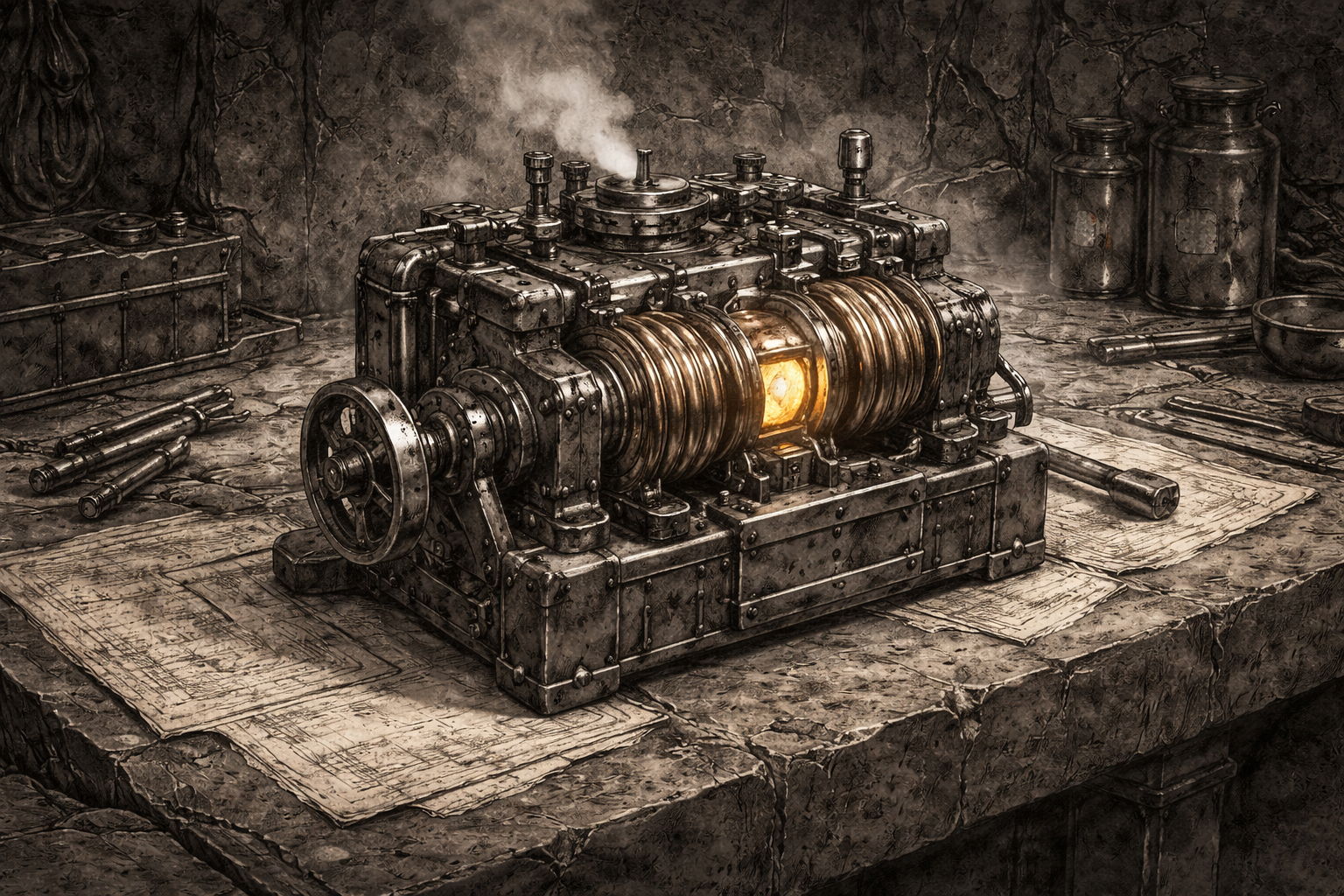
Their breakthrough was the embercoil: a compact engine core built around a fitted Heat Stone and wrapped in paired coils. One sealed inner coil held a fixed charge of meltwater taken from the Skyglass Range. Around it ran a second working coil connected to a small reservoir, pressure chamber, and drive assembly. The result was less like a great boiler and more like a dense mechanical heart: a hot block of stone, pipe, and water that could be bolted into a wagon, pump frame, lift, or boat housing and made to deliver repeated bursts of force. Its great advantage was not only that it worked, but that it worked in a footprint small enough to fit inside existing machines, cramped workshops, and hard-built mountain infrastructure. The important truth for most people was simpler: the embercoil made reliable machine motion possible in a form small enough to travel and practical enough to repair.
Once the first successful coil engines proved repeatable, the inventors behind them formed the Embercoil Compact. Publicly, the Compact was an agreement that no single hold, workshop, or realm would bury the design and force the others into dependence. Coil-based inventions would be shared, licensed, copied, improved, and put to work across all five realms. In practice, that promise helped steam technology spread faster than any earlier industrial craft in Aldenheim's history.
Major Developments
- Embercoil assemblies - the original heat-transfer breakthrough that made stable coil engines possible.
- Stationary steam engines - compact engine blocks fixed into lifting gear, saws, bellows, mills, and workshop machinery.
- Steam Wagons - first built as mine-haulers and freight pullers in Embercrag, then adopted across the peninsula.
- Paddle-wheel steam boats - river and coastal craft that traded speed for carrying power and schedule reliability; vessels such as the Dreams of Gold are descendants of these designs.
- Steam pumps - used to drain shafts, move water through industrial works, and support systems such as The Alden River Locks.
- Steam cleaners - pressurized cleaning and sterilizing devices used in bath houses, workshops, archives, hospitals, and places trying to keep grime, mold, or contagion under control.
The Steam Revolution changed each realm differently. Embercrag gained leverage through machinery, heat-stone supply, and engineering skill. Crownvale used steam for infrastructure, freight, and state logistics. Sablecoast adapted steam power to shipping and dock labor. Even realms that distrusted heavy machinery found themselves depending on compact engine blocks built elsewhere once the movement of grain, stone, ore, papers, and people began to rely on them. Because embercoil engines did not require vast dedicated spaces, they spread through existing workshops, wagons, docks, river craft, and civic works far faster than a bulkier design ever could have.
Hidden Truth
███ ██████ ███████ ██████ ███ █████████ ██ █ ███████ ██ ███████████ ███████████ ████ ██ █████ ███ ███████████ ███ █████ ██████ █████ ███ ███ ███████ ███ ████ ███ ████ ████████ ███████ ██████ █████ ██████ ██ █████████ ███ ████ ███████ ████ ████ █████████ █████ ████ ███ ██ ███ ██████████ ████████ ███ ████ ███ ████████ █████████ █████ █████ ██████ ██ ████ ████ ██████ ███████ ███████ ██████ ██████ ████ ████████ ███ ████ ████████ █████████ ████ ████ ██████ ████ █ ████████ ███ ██████ ████████ █ ███ ███████ ██████ ████ ███ ████████ ████ ██ █████ ███ ████████ ███████████ ███████ █████████ ████ █████████████ ███ ███████████████
████ ███████████ ██ ████ ██ ███ ███ ███████████ █████████ ███ █████ ██ ████ ███ ████████ ██████ ████ ██ ███ █████ ███████████ ███ ███████ ███ ██████ █████ ██████ █████ ██ ██ ██ ██ ███ ████ ███ ███████ ███ ██████ ███ ███ ████ ███████████ ██ ███ ████ ████████████ ██████ ███ ██████████ ███████████ ███ ██████ ███ ████ ███ ███████ ███ ██████ ███████ ██ ██████ ██ ███ ██████ ██████ █████ ██ ████████ ██████
█████ ████ █████ ████████ ████ █████ █████████ ██████ ████████ ████ █████████ ███████ ██████ ████ █████ ████ ███ ██████ ███████ ████ █████ █ ███████ ██ █████████ ████████ ████████ ██████████ █████ ████████ ██ ████████ █████ ████████ ██████ ██████████ ██████ █████████ ████ ██ █████ █████████ ████ █████████ ████ ██ ███ ██████████████ ██████ ██████ ██ ██████ ██████ █████ ███ ████ ██ █████ █████ █████████████ █ ███ ████████ ████ █████ ██ ██████ ███████ ███ █████ █████ ███ ███████ ██ ███████ █ ██████ ██ ███ ████ ███ ████████ ████
Current Relevance
Steam power is now part of the practical skeleton of Aldenheim. It does not replace animals, ships, roads, or human labor, but it multiplies all of them. Freight gets farther. Locks stay functional. Cargo boats keep moving when wind or muscle alone would fail. Most of the change is not giant factories, but compact engine housings fitted into the machines and systems people already use. That small footprint is still the technology's defining strength.
That dependence has made steam infrastructure strategically important. Heat-stone shortages, sabotage, broken valves, fouled pipes, and failed reservoirs now matter at the scale of regional politics. Engine yards and lockworks are guarded more closely than they once were. Workshops that understand old Compact standards can command high prices, and anyone who can repair a coil under bad conditions is treated as more than a mere mechanic.
The Steam Revolution also changed the tone of the world. Aldenheim still feels medieval in hierarchy, oath, and travel, but steam gave it a layer of practical machine-craft: fitted drive blocks, stubborn pumps, hissing wagons, and river craft that keep moving by engineered heat rather than wind alone. That is part of why the Corruption's advance feels so frightening: it is not only threatening villages and bloodlines, but the machinery the realms have come to trust to hold their fragile order together.
Notes
███ █████ ██████ █████ ███████████ ███████ █████████████ ████████ ███ ███ ████ ████ ████████ █████ ███ ███████ █████ ██████████ █████████ ███████ ████ █████ ███ ████ ██████ █████████ ███████ ████ █████ ████████ ██████ ████ █████ █████ ████████ ███████ ████████ █████████ ████ ████ ████ █████████████ ██████ ███████████ ███ ████████ ██ █████
█ █████ █████████ ██ █ ████████ ██ █████ ██████ █████ ███ ██ ███ █████ █████████ ████████ █ ███████ █████ ██ █████ ██████ █████████ ████ █████ ███████ ██████ █ ██████████ ████████ █ █████ ██████████ ███████ ███ █ ██████ █████ ████████ ███ ███████ ███████ ███ ███████ ██████ ████ ██ ██████ ███████████ ███ ██████████ ██████ ██ ██ █████████ ██████ █████ ████ ██ █ ██████████ ██ ███████ ███████ ███ █████ ████████ ██ ██████ ████ █████ ██████ ██ ███ ██ █ ██████ ██ ███████ ██ ███ ██ █████ ████████ ██ ██ ███████ ████ █ █████ ██ ████ █████ ███████ █████████ ██ ██████ ████ ██ ███████ ███████████ ██████ █████████ ███ █████ ████████ ██████ ███████ █████████ ███ ████████ █████████ ██████ ████ ████ ███████████ ███ █████ ██ █ ██████████████ ██ ██████ ████████ ████ ███ █ ██████ ██████████ █████ ██ █████ ██████ ██ █████ ███████████