Chain Islands
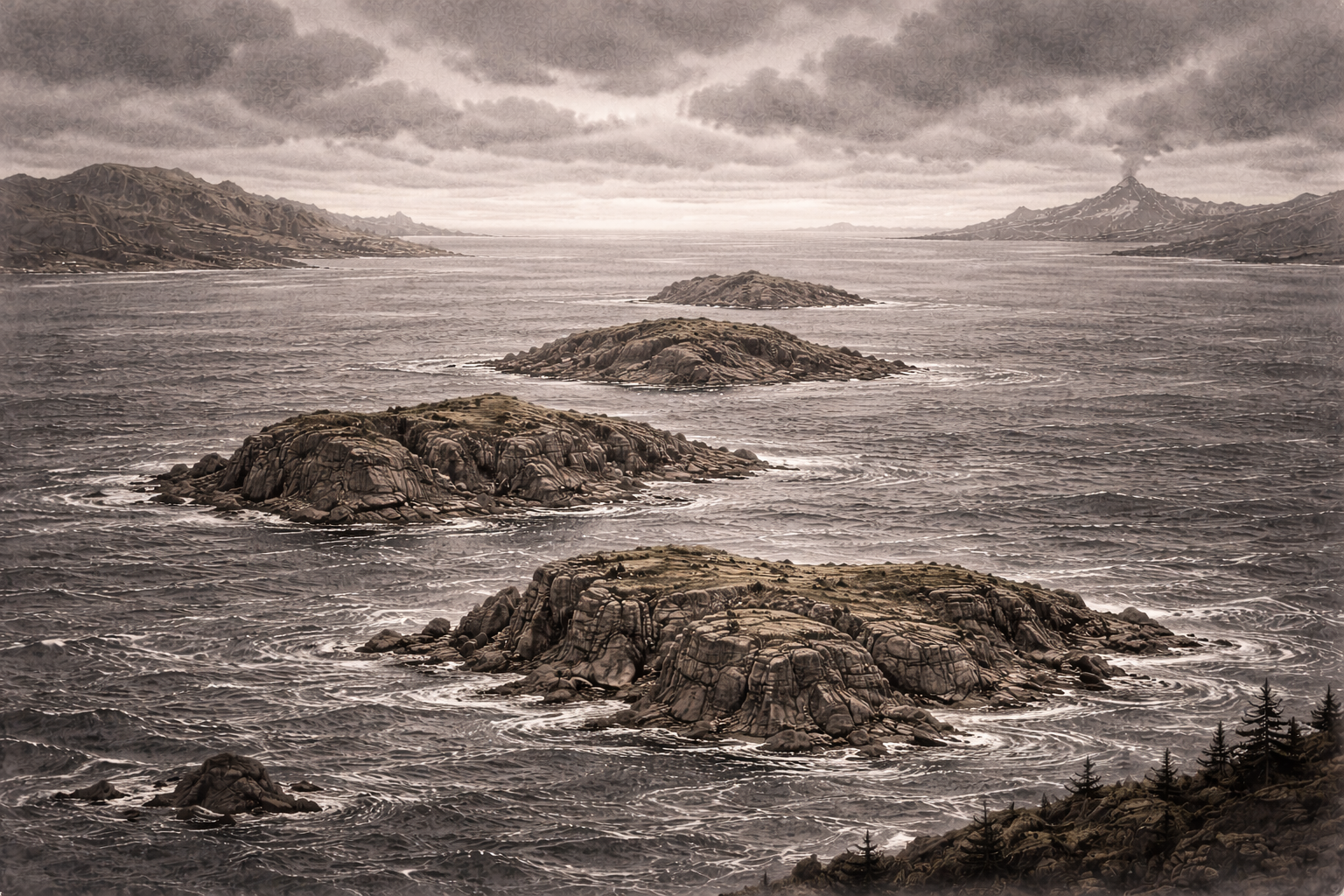
Cold islands that make the bay feel counted, watched, and older than the ships passing through it.
The Stepping-Stones of the Gray Sea
Image
Geography
The Chain Islands extend out of Chain Bay on the north side of the Alden Peninsula, forming a broken line between the calmer inner waters of the bay and the harsher open reach of the Gray Sea. Near the mainland they help break weather and current, giving the bay its darker, steadier surface. Farther out, the islands become rougher, lonelier, and more exposed until they feel less like coast and more like the beginning of another sea entirely.
Most of the islands are low, wind-cut, and rocky, with thin grass, poor soil, bird-cliffs, and narrow landings that matter far more to sailors than they do to farmers. They are navigational markers, shelter points, hazards, and superstitions all at once. Fishermen, wreckers, bay pilots, and smugglers all know them by shape, but very few people think of them as places to live.
Islands
- Origin Isle - the second largest island and the most famous, containing the Black Temple and officially left uninhabited since The Founding of Aldenheim.
- Wheat Isle - low and pale with enough soil for scrub grass and short-lived summer growth.
- Silk Rock - sharp, exposed stone and seabird ledges; difficult landing, often used only as a marker.
- Forge Stone - dark rock with a heavier, iron-stained look than the other islands.
- Glass Bay Isle - the eastern-facing island where storm polish and cold water leave the beaches littered with sea glass and pale shard-stone.
- Little Island - small even by chain standards, more a named outcrop than a settlement ground.
- Fire Oath Isle - the largest island in the chain and the one most exposed to the rough outer waters of the Gray Sea.
Reputation
The islands are entangled with the founding myths of Aldenheim and with the practical life of its northern coast. Some are read as landmarks, some as warnings, and some as mnemonic fragments of a much older oath. The closer islands belong to working waters. The farther ones feel claimed by weather and memory.
Notes
███ █████ ██████ █████ ███████████ ███████ █████████████ ████████ ███ ███ ████ ████ ████████ █████ ███ ███████ █████ ████ █████████ ████████████ ███ █████████ ██████████ █████████ ████████ ███████ ████████ █████████ ████ ████ ████ █████████████ ██████████ ███ █████ ██ █████
███ █████ ██████ █████ ██████ ██ ███ ████ ███████ ███████████ ███████ ████████ ███ ███████ ███ █████ ██ █████ ███ ████ ███ ████ ████ ████ ███████ █ ████ ████ ███ █████ ███████ █ ███████ ██████ ████ ██████ █ ████ ████ ███ ██████ ████ ██████ ████ ████ ███████ ███ ██████ ████████ ████ ███ ███ █████ ██████ ███████ ██ ██████ ███ ██ ███ ██████ ██████ ████ ███ ████ ████ ████ ██████ ██ ███████ ████ ██ ██████ ███████ ██████████ ██ ███ ███ █████ ██ ███ ████████████ ████ ███████████ ██ ██████ █████ ███ ██████ ████████ █████ ██ ███ ██████ ███ ██ ███ ████ ████████ █████████ █████ ██████ █████████ █████ ██████ ███ ███████ ███████ ███ █████ ██ ███ ███ ██████ ████ █████ █ ██████ █████ █████ ████ █ ██ ███ ███████ ████ ██ ███████████████ ██████ █ ████ ███████ ██████ ████ █ █████ ████████ ███ ███████████ ██████ █████████ ████████ ███████████ ███ ███████ ████████ ████ ██████ ██████ ██ ████████ ██ █████ ███████████